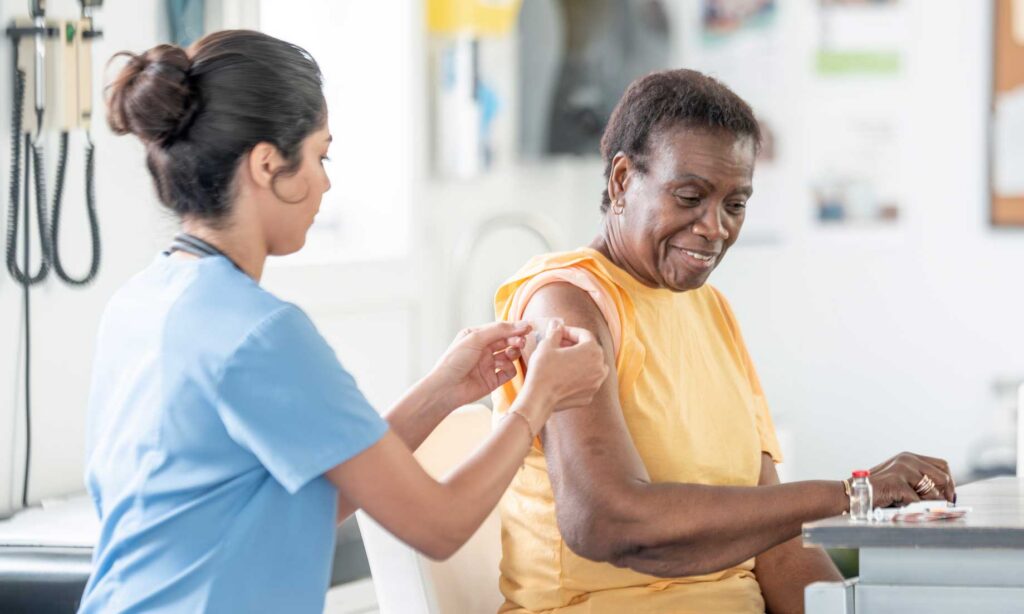
As cold and flu season approaches, nurse Venus Balaoing has an important message for people with pulmonary hypertension: Stay up to date on your recommended vaccines.
Why? People with PH are at higher risk for complications from respiratory infections like flu or COVID, which tend to peak in the winter, said Balaoing, an advanced practice nurse and coordinator for the pulmonary hypertension program at Jersey Shore University Medical Center in Neptune, New Jersey.
“The best time to get vaccinated is actually September and October to ensure antibodies are active before transmission peaks between December and February,” she said.
More awareness needed
Although they are a critical way to avoid severe respiratory illness, vaccines often are overlooked by patients, likely due to the fear of potential side effects or misconceptions about the vaccine efficacy and safety, Balaoing said.

“The community is still not fully aware of this risk,” she said, noting that providers sometimes aren’t mindful of bringing it up because of their focus on PH disease treatment and management. “The discussion is often to left to primary care doctors. But PH absolutely belongs in the bucket of chronic heart and lung diseases that make you vulnerable.”
San Antonio pulmonologist and PH specialist Rodolfo Estrada couldn’t agree more. A lack of data makes the scope of the problem hard to understand, he said.
Hoping to gain more insight, Estrada’s team collected data on vaccination rates among 175 PH patients at UT Health San Antonio between late 2020 and early 2023. The results were published earlier this year.
Study shows low vaccine rates

“The main takeaway? We have subpar vaccination rates among a high-risk population,” he said. Specifically, about 68% of patients got the initial COVID vaccine, but only 15% received a booster. About 50% of patients received the pneumonia vaccine. Most worryingly, only 23% were vaccinated against flu during the 2022-2023 winter season.
Vaccines are widely available and affordable, so accessibility isn’t behind the low rates. Instead, Estrada thinks a number of factors are at play. First, PH patients are getting mixed messages from health authorities on whether they get vaccinated or not. Second, healthcare providers who are not in PH centers may not know to offer them. And lastly, there’s growing national vaccine hesitancy from public health discord.
Why PH is high risk
When a person with PH isn’t protected, they have a higher risk of developing severe complications that require hospitalization, experts say.
That’s because pathogens like flu and pneumonia damage lung tissue, causing low oxygen and placing extra strain on already vulnerable heart and lungs. Additionally, the added and intense inflammation from the body’s immune response potentially worsens a person’s underlying PH.
“We’ve had cases where an unvaccinated person ended up being hospitalized because when they’re sick, they become hypoxic, and they have more symptoms,” Balaoing said. “For pneumonia, for example, I usually tell patients, ‘This will not prevent you from getting pneumonia but if you end up with it, your symptoms will be less, because you have protection in your body.’”
Both Balaoing and Estrada would like to see doctors and nurses discuss vaccination more often.
“I do think having an added scope to what we do – to have some preventative conversations as part of our routine visits – would carry a lot of weight,” Estrada said. “Ideally we get to a place where, as a community, we understand the higher risk, and that PH centers especially are including vaccine discussions as a step at a routine appointment.”
Recommended vaccines for adults
Balaoing and Estrada use the CDC’s recommendations as well as the 2022 pulmonary hypertension guidelines from the European Respiratory Society.
Which vaccines do adults need? This will vary depending on your unique health situation, especially if you are immunocompromised or considering an organ transplant, but in general the recommend list is:
- Yearly flu shot. (People 65+ should get the high-dose flu shot for added protection)
- Yearly COVID booster
- A one-time course of the pneumonia vaccine (pay attention to which kind you receive, as some versions require two shots a year apart)
- A one-time course of RSV vaccine
- A TDAP booster every 10 years to prevent diphtheria and pertussis, which are two severe types of respiratory infections
What about kids?
Vaccination is just as critical in kids with PH, points out Megan Griffiths, director of the pediatric pulmonary hypertension program at the University of Texas Southwestern in Dallas.

“A respiratory infection that would keep a healthy child home for a few days can push a child with PH into a crisis – low oxygen, strain on the right side of the heart, hospitalization, sometimes the ICU,” she said. “Vaccines are one of the few things we have that can prevent those events rather than react to them.”
If you’re the parent of a child with PH, talk to your pediatrician if you have any concerns or questions. In general, pediatricians are in charge of vaccines and follow the American Academy of Pediatrics Recommended Child and Adolescent Immunization Schedule.
Griffiths sympathizes with parents who are hesitant or unsure what to do, but points out the long safety record of vaccines in PH patients.
“When people talk about vaccines being for kids with underlying conditions, kids with PH are exactly who they’re talking about. Vaccinating your child, and everyone in the household, is one of the most protective things you can do.”
Find more information about respiratory health, vaccines and PH.
Respiratory healthCategories: