


The consequences of extreme temperatures and weather events can affect people directly and indirectly. Directly, high heat and bitter cold can make people sick and worsen diseases. Poor air quality can harm the lungs. Floods and droughts can spread diseases.
Indirectly, storms can cause power outages, delay medication delivery and cut off roads to medical clinics and hospitals.
Poor air quality
People who live in areas with wild fires are at risk of lung diseases or problems from inhaling irritants in the air. That risk is worse for people with pulmonary hypertension, asthma or chronic obstructive pulmonary disease. Doctors have noticed serious worsening of patients’ obstructive lung diseases and newly developed asthma cases after wildfires in their areas.

Fires are more rampant now. They’ve always been a problem in California, but as more and more people build homes in fire zones, we’re seeing greater health impacts of these major fires.
Protect yourself from smoke
The following actions, recommended by the Centers for Disease Control, can help protect you against air polluted by wildfire smoke.
Enter your location at airnow.gov or your phone’s weather app to see up-to-date air quality measurements called AQI or air quality index, a system developed by the Environmental Protection Agency to determine how polluted the air is and what the health dangers may be. State environmental agencies also track air quality and maintain online maps.
AQI tracks ozone, particulate matter in the air, carbon monoxide, sulfur dioxide and nitrogen dioxide. The index uses a scale that goes from clean air (green) to hazardous air (maroon). People with sensitive lungs or other health issues should pay attention to moderate (yellow) and unhealthy for sensitive groups (orange), while everyone may feel the effects of unhealthy (red), very unhealthy (purple) and hazardous.
Close your windows and doors, and use a portable air cleaner.
If you have air conditioning use high efficiency filters and close any fresh air intake.
Read the Environmental Protection Agency’s instructions on how to create a Clean Room.
Reduce exposure to particulate matter that can damage your lungs by wearing a NIOSH-approved respirator.
Learn more about approved respirators in this PDF from the CDC.
The best time to plan is before a wildfire occurs.
- PHA has a list of emergency supplies every PH patient should have on hand before an emergency.
- Know your evacuation route and locate a shelter or safe place in advance.
- Have a plan for your pets and animals.
- Learn more on the CDC’s page on wildfires.
Extreme heat
Very hot summers and winters cause physiological changes. When people are exposed very hot weather, their blood pressure can drop and increase their heart rates. And people with cardiovascular diseases are at four to seven times greater risk of death from extreme heat.
In hot weather, people who take diuretics might need to adjust their medication or drink more water than usual. Many people with PH take diuretics for fluid retention.
And when it’s too hot outside, people often avoid outdoor activity instead of getting needed exercise. Staying indoors can cause a vicious cycle of deconditioning and dyspnea, where people get more short of breath and their muscles weaken from lack of mobility.

There are a lot of things that can affect how you breathe, but patients who have pulmonary hypertension have an impaired cardiopulmonary system. Even though they may be very well-treated, I think they’re more susceptible to changes in the environment than people who don’t have pulmonary hypertension.
Protect yourself from hot-weather risks
Stay within any fluid restrictions from your PH specialist unless they tell you otherwise. Avoid caffeine and alcohol, including non-herbal tea.
A wide-brimmed hat allows you to take the shade with you.
You can use a fan to keep cool in some circumstance, but not when the temperature is higher than 90F. If you don’t have air conditioning at home, consider visiting a temperature-controlled public place such as a mall or library.
Avoid physical work during the hottest part of the day. You can rest and stay cool by lying down with a cold towel over your face or by taking a cool bath or shower.
If you expecting to spend significant time outdoors, even in a car, use broad-spectrum, water-resistant sunblock with at least SPF 15. Apply liberally and re-apply every two hours after swimming or sweating.
Heat breaks down medications like Flolan (epoprostenol), Remodulin (treprostinil) or Ventavis (iloprost). Don’t leave them in the car or anywhere they could overheat. Keep ice packs on hand for epoprostenol.
Change your dressings more often if you tend to sweat.
Contact your PH specialist if you are sweating excessively, experience excessive weight loss, your blood pressure drops or if lightheadedness or dizziness worsen.
Your guide to a safe summer with PH
Learn how to manage symptoms, stay active safely and prepare for warm-weather activities.
Beat the heat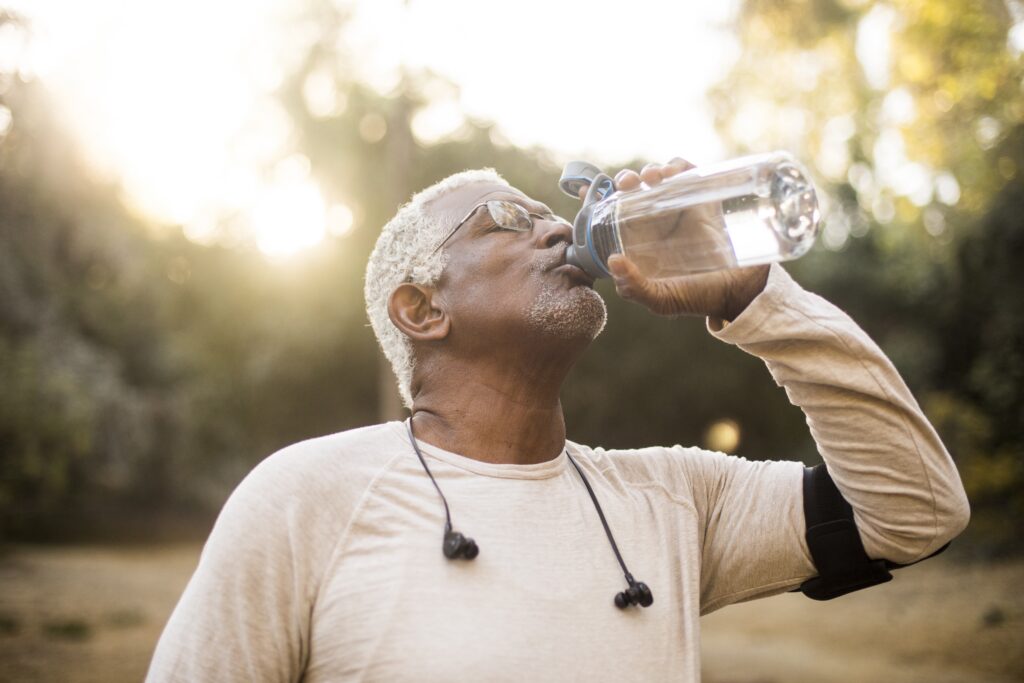
Extreme cold
Cold weather can be harsh on the body, especially the lungs and heart. The cold also can exacerbate Raynaud’s phenomenon, which affects some people with PH. Raynaud’s limits blood flow to the extremities, which can cause fingers and toes to feel numb and cold. That feeling can increase in cold temperatures.
Extreme weather conditions can be associated with an increase in mortality in patients who have cardiovascular conditions. And there’s even some suggestion that cold weather may be a little bit more detrimental than warm weather.
Avoid a cold weather emergency
Cover your mouth with a scarf or mask in the cold. That way, the air you breathe won’t be as cold and won’t go directly to the lungs in a very, very cold state.
Prevent hypothermia and chills by wearing multiple layers and a warm hat. Use heat packs inside of mittens to keep your hands warm. Briefly walk around the house or stretch to warm up your muscles before heading into the cold. When returning indoors, have your home ready for comfort. Keep your slippers, comfortable and warm clothes, and a warm drink in a thermos by the door.
Use a cane to keep steady. Try to avoid icy or slippery situations.
Ask neighbors or friends to help clear your walks. If your PH specialist wants you to exercise, walk on a treadmill indoors if it’s too cold to exercise outside.
Store extra blankets, warm clothing, food and water in your car. Keep a charged cell phone on you at all times. If you use oxygen, keep an extra cannula with you. Don’t forget to let someone know where you’re going and when you plan to return.
You can avoid many effects of cold weather by staying inside. But dry indoor air can irritate your lungs.
Patients take on climate challenges
-
 Preparing for the Unpredictable
RoxAnna Blackwell of Calhoun Falls, South Carolina, (pictured center) is an educator and mother of one son. Blackwell enjoys spending time with family and friends, good food and traveling. She originally shared her Hurricane Helene experience in Pathlight, PHA’s quarterly member magazine.
-
 Emergency Prep: Surviving Poor Air Quality
Evans Wilson and his wife Alicia were affected by wildfire smoke on the West Coast in 2020. Evans has pulmonary arterial hypertension, pulmonary fibrosis and CTEPH.
-
 Living and Breathing through PH – and Hurricane Maria
Born in 1976 and raised on the beautiful island of Puerto Rico, Luis Cortés had to endure the challenge of living with PH through a devastating hurricane.
Respiratory illness can affect you all year long, not just in cold and flu season or extreme weather. Learn how to protect yourself.
Respiratory health