Some common symptoms are shared across all types of PH. One goal of PH treatment is to reduce the impact of symptoms on day-to-day life. PH symptoms may be different from person to person or may even change for the same individual over time. Sometimes symptoms may require a call to 911 rather than your clinic care team. It’s important to learn the difference so you can make the right call.

Common PH symptoms
- Shortness of breath
- Fatigue
- Chest pain or heart palpitations
- Light headedness or dizziness
- Edema (swelling) especially in the legs and ankles
- Minor memory issues or “brain fog”
Report changes in your symptoms to your PH care team. They can help guide you when symptom changes require emergency attention.
When to call 911
Call 911 if you or your loved one with PH is experiencing:
- Difficulty breathing or an inability to catch your breath.
- Chest pain with sweating, nausea, or pain that spreads to your arm or jaw.
- Severe or sudden fainting episode.
- Unresponsiveness or sudden confusion.
- Blood oxygen level (SpO₂) below 85% and not improving with oxygen.
- Seizure or inability to wake the person.
- Worsening shortness of breath.
- A loose intravenous (IV) line.
- Unexplained bleeding or blood in the IV line.
Call 911 (or have someone drive the PH patient to the emergency room) if they have:
- Chest pain that doesn’t go away.
- A near-fainting episode.
- New or worsening shortness of breath at rest.
- Rapid weight gain (two-plus pounds in a day or five pounds in a week).
- Noticeable increase in swelling.
- New confusion or extreme fatigue.
- Oxygen saturation (SpO₂) consistently < 90% despite oxygen use.
- Persistent vomiting or diarrhea.
- Fever over 99 degrees Fahrenheit or chills.
In all the above cases, the person with PH should not drive themselves to the emergency room.
When it’s OK to wait and call your care team
Call a PH specialist the next day (when the office is open) if you or a loved one with PH experience:
- Increased shortness of breath with daily activities.
- Mild swelling in ankles, legs or belly.
- Feeling more tired or weak than usual.
- Lightheadedness or dizziness.
- Chest discomfort that is mild or goes away.
- Persistent cough.
- Missed doses or issues with medications.
- Mild blue tint to lips or fingers that improves with rest.
- Decreased appetite.
Information for emergency medical professionals
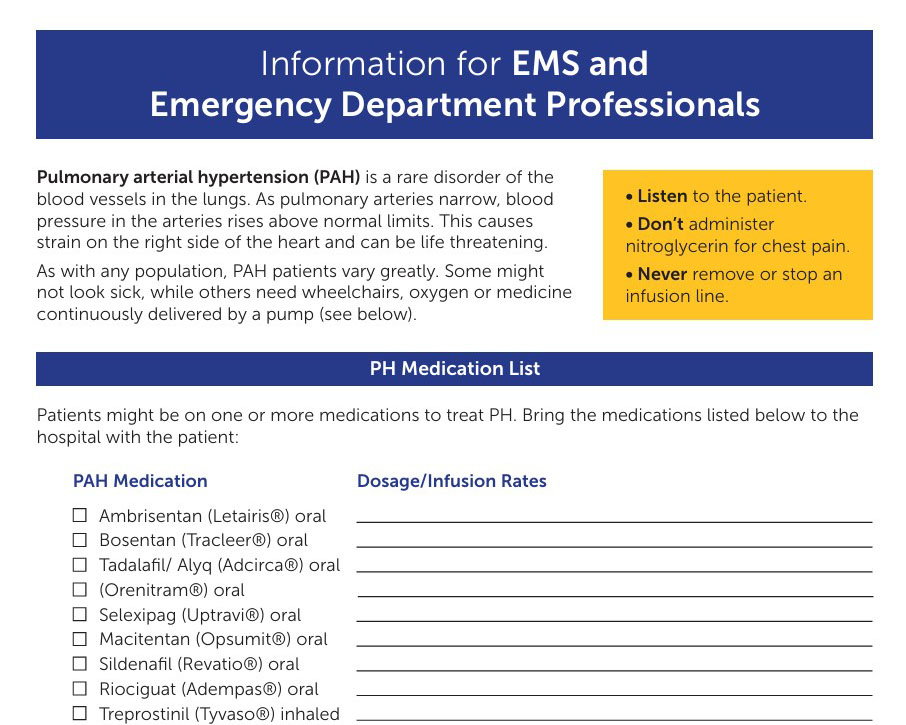
Here’s what EMS professionals need to know about you and your PH when they respond to a 911 call. You can download this checklist, fill it in, print it out and post on your refrigerator.
Download the PDF