


Your doctor may prescribe various treatments or therapy options to aid in managing your PH. Extracorporeal Membrane Oxygenation, known as ECMO, is one option used by doctors to support and improve quality of life. This machine provides additional support by pumping blood, providing circulation and moving the flow of blood through the body. This is considered temporary life support to allow the body to heal. ECMO is not a cure.
You may need ECMO therapy if you experience:
- Severe breathing problems
- Heart failure
- Inability to function day to day
There are two types of ECMO
Veno – Venous (VV) ECMO which acts as the lungs.
Veno Arterial (VA) ECMO which acts as the heart and lungs.
How ECMO therapy helps
Helps with breathing: If you’re having difficulty getting oxygen, ECMO therapy helps to provide extra oxygen to the blood which makes it easier for those with PH to breathe.
Helps with oxygen levels: If your oxygen levels drop very low and regular treatments don’t help, ECMO can be used to improve those oxygen levels
Helps the heart: PH makes the heart work hard to pump blood. With ECMO therapy, the machine with assist with pumping blood, allowing the heart to rest and recover.
Helps keep your condition stable: If you are living with severe PH or waiting for a lung transplant, you may require more time to heal. ECMO can keep you stable while you get better or wait for a new lung. ECMO therapy is sometimes also used after transplant for support through the recovery period.
Your PH team will decide if you need ECMO
ECMO therapy significantly improves patient outcomes for those with severe PH. It provides critical support during life-threatening situations and allows patients to receive the necessary oxygenation and cardiac support while minimizing the burden on their failing lungs and heart. The decision to initiate ECMO requires a multidisciplinary team, considering the patient’s condition and overall treatment goals.
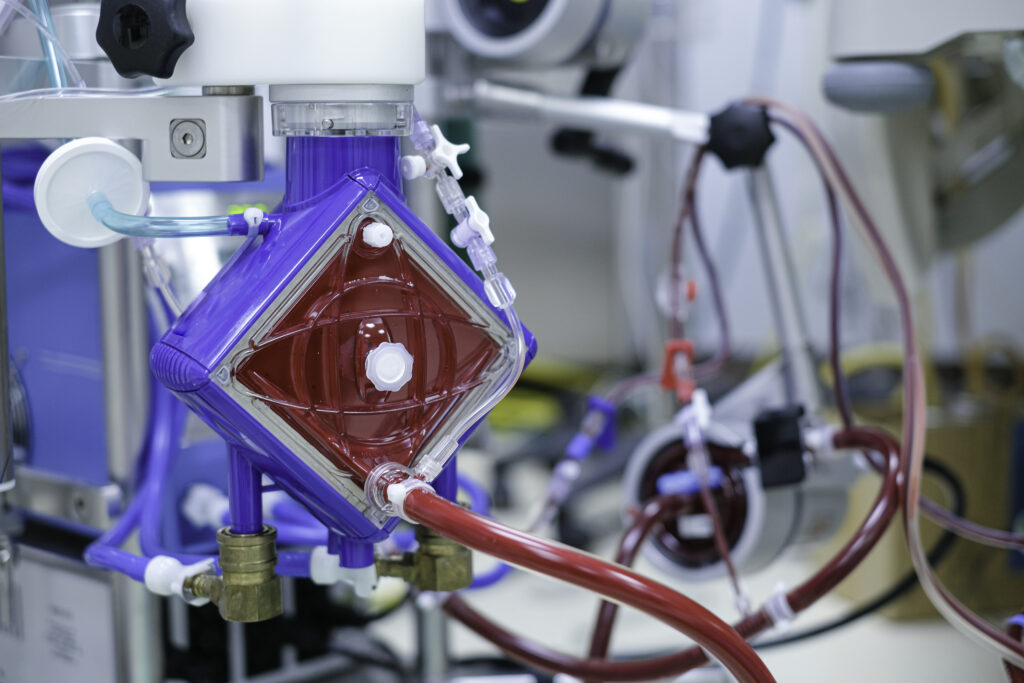
ECMO risks include:
- Bleeding – Loss of blood may occur inside or outside of the body.
- Blood clots – Blood may clump together to stop bleeding but may also cause blockages in the body. These blockages can then cut off the blood supply to parts of the body.
- Poor circulation/ischemia – When the blood supply is cut off to parts of the body, this causes a lack of oxygen and nutrients to the body and leads to tissue damage.
- Stroke – Occurs when there is a blood clot in the brain that prevents the delivery of oxygen.
- Infection – Occurs when germs enter the body.