


Persistent pulmonary hypertension of the newborn or PPHN occurs when the blood vessels in the lungs don’t relax or “open” as expected. PPHN is often diagnosed with an echocardiogram or ultrasound of the heart.
Before birth, babies do not use their lungs to breathe, in fact, blood will bypass the lungs. In the womb, the placenta supplies oxygen to the baby through the umbilical cord. At this point the blood vessels in the lungs are not fully relaxed.
Following birth, a baby takes its first breath and the blood vessels in the lungs relax. This allows blood to easily move through the lungs and receive oxygen.
In PPHN, the blood vessels in the lungs do not fully relax at birth, causing low oxygen levels, low blood pressure and a rapid heart rate. PPHN can cause stress to the heart and other organs.
Although the majority of cases resolve within a few weeks, PPHN can range in severity from mild to severe. Severe forms of PPHN can be life threatening or cause long-term developmental delays.
How common is PPHN?
- PPHN occurs in about two of every 1,000 live births.
- It primarily occurs in babies born at 37 weeks or later, although it can affect premature infants.
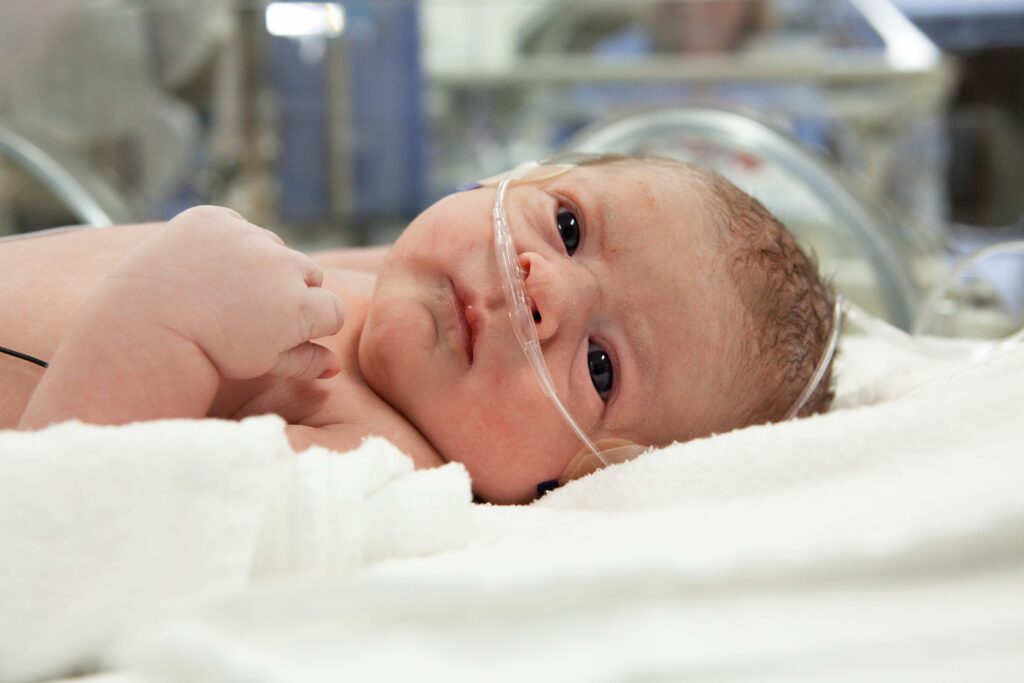
Diagnosis of PPHN
What to look for in the minutes and hours following birth?
- Fast breathing and heart rate
- Bluish lips, hands and feet
- Low blood oxygen (hypoxemia)
- Low blood pressure
The following tests are used to help diagnose PPHN:
- Chest X-ray
- Echocardiogram (heart ultrasound)
- Blood tests
- Pulse oximetry (blood oxygen level test)
Risk factors
There is no known cause of PPHN. Risk factors include:
- Meconium aspiration syndrome (baby breathes in stool and amniotic fluid at delivery). MAS occurs when a baby inhales meconium-stained amniotic fluid during birth. Meconium is a baby’s first bowel movement, which should happen after birth. If this happens before birth, meconium can enter the lungs, causing breathing difficulties and potentially leading to pulmonary hypertension.
- Respiratory distress syndrome (often due to underdeveloped lungs). RDS affects premature babies who struggle with breathing. Pulmonary hypertension can be a complication of RDS but usually improves as the baby’s breathing stabilizes.
- Congenital diaphragmatic hernia (organs from the abdomen enter the chest through a hole in the diaphragm, the muscle that divides them). CDH is a condition where the diaphragm does not form correctly, allowing abdominal organs to move into the chest, impacting lung development. Babies with CDH may develop pulmonary hypertension, with severity correlating to the extent of the hernia. Some may experience long-term pulmonary hypertension while others see improvement as they grow.
- Complex congenital heart disease. CHD includes structural heart problems present at birth that require multiple interventions. Pulmonary hypertension can result from complex CHD and may improve with surgical repairs. However, some patients may experience long-term pulmonary hypertension.
- Lung hypoplasia (undergrowth, resulting in fewer blood vessels and airways in the lungs).
- Infection. Newborns can develop pulmonary hypertension from infections like pneumonia. Fortunately, this type of pulmonary hypertension often improves or resolves once the infection is treated.
- Heart disease. Certain heart defects can be associated or even contribute to abnormal elevation of lung pressure (pulmonary hypertension). This can include holes in the heart such as ventricular septal defects or abnormal vessels going into the heart like a large patent ductus arteriosus or pulmonary vein stenosis. Other issues such as abnormalities of the aorta, ventricles (heart pumping chambers) or heart function can cause pulmonary hypertension as well.
- Gestational exposure to certain medications taken by the mother, such as selective serotonin reuptake inhibitors (SSRI), commonly used to treat depression.
- Genetic conditions.
- Abnormalities in maternal body mass index (overweight or underweight).
- Cesarean section.
- Large for gestational age.
While PPHN may occur in either sex, it is more common in male babies than female. Babies of Black and Asian mothers also can be more at risk.
Treatment Options
Treatment generally focuses on supporting the heart, lungs and circulatory system to allow time to improve pulmonary blood flow. Treatment occurs in neonatal intensive care units (NICU). Treatment interventions are based on a baby’s condition and issues.
Treatment options
- Oxygen
- Intubation/mechanical ventilation
- Antibiotics
- Intravenous fluids
- Sedation
- Blood pressure medications
Occasionally, medications to treat other types of pulmonary hypertension (PH) will be used.
Additional medications may include:
- Inhaled nitric oxide
- Endothelin receptor antagonists
- Phosphodiesterase type 5 inhibitor
- Prostacyclins/prostanoids.
For severe cases of PPHN, a baby might be connected to an artificial lung (ECMO) to help circulate its blood. The procedure, known as blood extracorporeal membrane oxygenation, provides heart-lung support until the baby’s pulmonary blood vessels can sufficiently circulate blood and oxygen.
Recovery
Infants who survive PPHN may need weeks or months to heal. After discharge, they will need care from pediatric pulmonologists and/or cardiologists. Many babies will remain on PH therapy after NICU discharge and will need a PH specialist to manage their care. Some babies will need care from developmental specialists and neurologists because of the increased risk of developmental delays.