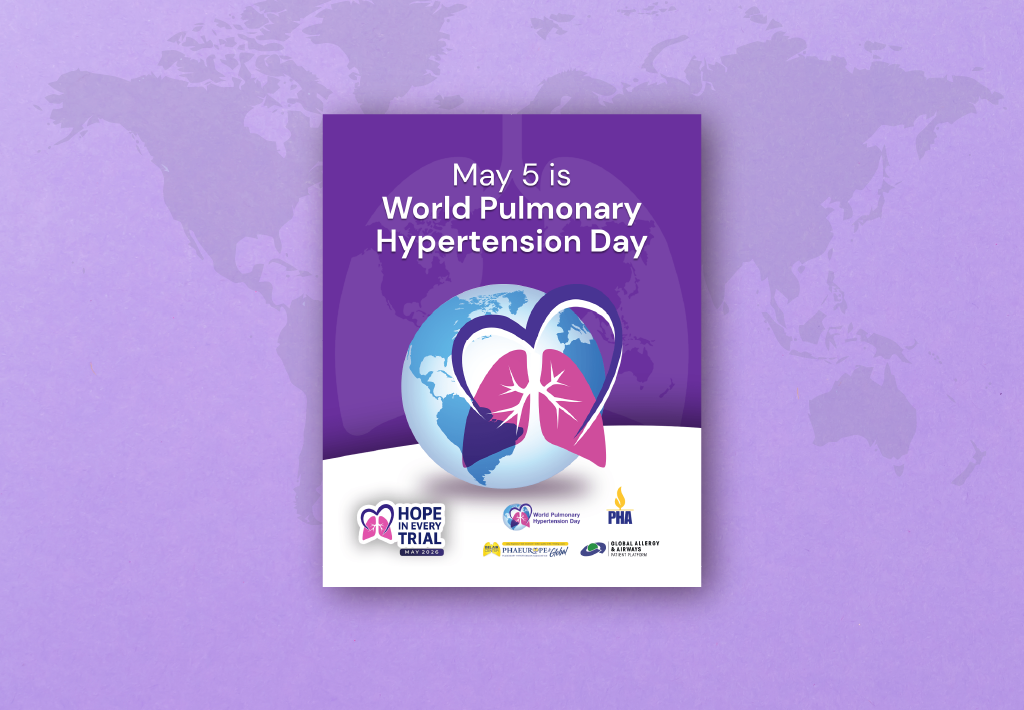
2026 World Pulmonary Hypertension Day
Each year on May 5, World Pulmonary Hypertension Day brings the global pulmonary hypertension community together to raise awareness and advocate for earlier diagnosis, better treatments and improved care.
Observed annually on May 5, World Pulmonary Hypertension Day is a global effort to raise awareness of pulmonary hypertension, a serious and often misdiagnosed condition that affects the lungs and heart. Led by PHA Europe, the global campaign brings together PH organizations and advocates to coordinate awareness and education efforts worldwide.
The Pulmonary Hypertension Association joins this year’s campaign, “Hope in Every Trial,” to highlight the importance of clinical trials and the role they play in advancing care for people living with pulmonary hypertension. PH is a complex progressive condition that affects people of all ages and backgrounds. While treatments have improved, there is still much to learn about the condition and how to expand options for people living with PH. Clinical trials play an important role in that progress by helping researchers better understand PH, evaluate potential therapies and improve care over time. They also give patients an opportunity to contribute to future advances that may benefit others in the PH community. Raising awareness about clinical trials, addressing misconceptions and expanding access are all essential to moving PH research and care forward.
As part of this year’s World PH Day observance, PHA will share information and resources about clinical trials, including why they matter, what participation can involve, how patients and families can learn more about available opportunities and how to participate. The campaign also features stories from patients who have participated in clinical trials and encourages others to advocate for broader access to trials in their countries. Their experiences help illustrate why research matters, why access to clinical trials remains a priority, and how participation can contribute to progress in PH care.
History
Organizers first observed World PH Day in 2012 in Madrid, Spain. The Asociación Nacional de Hipertensión Pulmonar, Spain’s national PH association, launched the global awareness day with support from 22 patient associations, 10 rare and affiliated disease organizations and eight scientific societies. They selected May 5 to mark the anniversary of Spain’s first recorded pediatric death from PH, which was linked to a toxic batch of rapeseed oil that caused thousands of PH cases in the early 1980s.
Today, PHA Europe leads the World PH Day campaign and provides resources for individuals and organizations to raise global awareness of PH.
-
Group 1: Pulmonary Arterial Hypertension
Group 1 pulmonary hypertension is also known as pulmonary arterial hypertension. PAH occurs when the arteries in the lungs narrow and stiffen, leading to increased pressure in the lungs.
About PH
-
Group 2: PH Caused by Left Heart Disease
Group 2 pulmonary hypertension caused by left heart disease is the most common cause of PH in the Global North. Up to 60% of patients with known left heart disease also have PH.
About PH
-
Group 3: PH Due to Lung Disease or Hypoxia
Chronic obstructive lung diseases such as COPD or emphysema, restrictive lung diseases such as interstitial lung disease or pulmonary fibrosis, or a lack of oxygen through sleep apnea and high-altitude environments can all cause Group 3 PH.
-
-
World PH Day Toolkit
Beginning on World PH Day, May 5, more than 80 pulmonary hypertension organizations across the globe will participate in an awareness campaign to advocate for greater access to PH diagnosis, treatment and care. To support this effort, the Pulmonary Hypertension Association provides a digital toolkit with easy-to-translate materials that you can use to amplify the campaign throughout May.
Toolkit