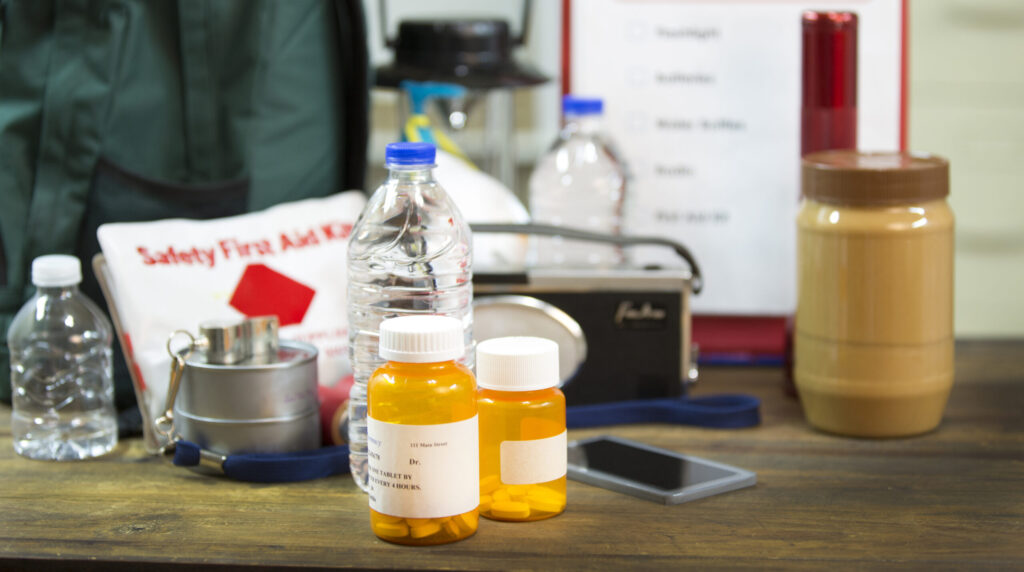
Whether you’re going to the hospital or have to leave home because of a disaster, it’s important to be prepared. This list includes tips for essential supplies to include in your emergency kit.
- Phone list
- Doctor’s note
- Medication list
- Medications
- Medical supplies
- Oxygen essentials
- Thermometer
- Blood pressure monitor
- Cell phone
- Medical alert bracelet
- Overnight bag
- CPAP or BiPAP machine
Consider what you might need while away from home:

Create an emergency phone list of local emergency phone numbers, PH care team, specialty pharmacy and drug reps, and the ambulance company that provides service in your area.
Ask your physician to write a note that briefly explains your illness and your medications. Consider making it a small, laminated card that is easy to carry with you.
Make sure you have a complete list of all medications you take, including prescription, homeopathic or over the counter. Medical professionals can refer to the list to ensure they don’t give you something that will interact with other medications or cause complications. Include your oxygen dose/flow rate if you use supplemental oxygen.
Keep extra doses of your medications to take with you when you travel or go to the hospital. Some medications are available only through a specialty pharmacy and might not be on-hand at a hospital.
Gather all supplies for mixing, dispensing, infusing or inhaling your medication.
If you use infused medication, keep a back-up pump in your emergency kit. Catheter site supplies. If you have a catheter, include site cleaning and dressing supplies with you, such as gloves, mask, alcohol pads, dressings and tape.
If you take subcutaneous Remodulin, don’t forget to pack local, topical and systemic medicines and creams you use to manage site pain.
If you have to refrigerate your medicine, make sure your emergency kit includes a portable cooler and large ice packs. Check that the cooler has room for the ice packs, your back-up medicine cartridge (place the cartridge inside a plastic baggie to limit condensation) and several of the small plastic ice packs you use in your pump pouch. Ideally, you should be able to keep your medication cool for several hours.
Keep a copy of your oxygen prescription or dosage in your medicine bag.
Make sure you have back-up oxygen tanks. Most oxygen concentrators don’t have battery backups. Large liquid oxygen tanks (stationary) are difficult to move. Portable tanks can be lifesavers during power outages or natural disasters until you can get to a constant supply.
If you have a portable tank, you’ll need a regulator to control the flow. Invest in a plastic tank tool to turn on the oxygen. Don’t use pliers. A metal (tool) on a metal (tank) could cause a spark, which you must avoid with oxygen.
Carrying a portable tank can be difficult, but using a tank cart makes it easier to get around without assistance. Many wheelchair and scooter manufacturers make tank holders.
Keep a spare nasal cannula in your kit. They wear out quickly and are easy to damage. Some oxygen tanks require special cannulas.
Take along an extra section of oxygen tubing and a few connectors, even when you go to the hospital. If you forget them, your tubing could be a few feet shorter than you’d like.
Never leave home without a thermometer. Take your temperature if you think you have a fever (a sign of infection).
These are inexpensive and invaluable when you need to provide vital information to your doctor over the phone. Wrist cuff models are smaller and take up less space in your kit than those for the upper arm.
Always carry a cell phone and let people know where you are going if you are traveling alone. Consider signing up for a roadside assistance program.
It’s a good idea to wear a medical alert bracelet or necklace that gives emergency personnel details about your condition(s).
Pack a small bag with loose-fitting clothing, pajamas, slippers and basic toiletries for the hospital or if you need to leave home.
If you suffer from sleep apnea, you must have your CPAP or BiPAP machine and mask/tubing/humidifier with you. Take it with you to the hospital to ensure you have a mask that fits and pressures are correct. Remember your oxygen enrichment (bleed) connector if you use one.
PHA’s Empowered Patient Toolkit helps you track medication doses, insurance coverage, test results and more.
Download forms and checklists