


Balloon pulmonary angioplasty is a minimally invasive procedure used to open narrowed or blocked pulmonary arteries. BPA is used for patients with CTEPH, a condition in which pulmonary embolisms or blood clots cause chronic obstruction in the lungs. These blockages raise pressures in the lung circulation, requiring the heart to work harder to deliver deoxygenated blood from the heart to the lungs.
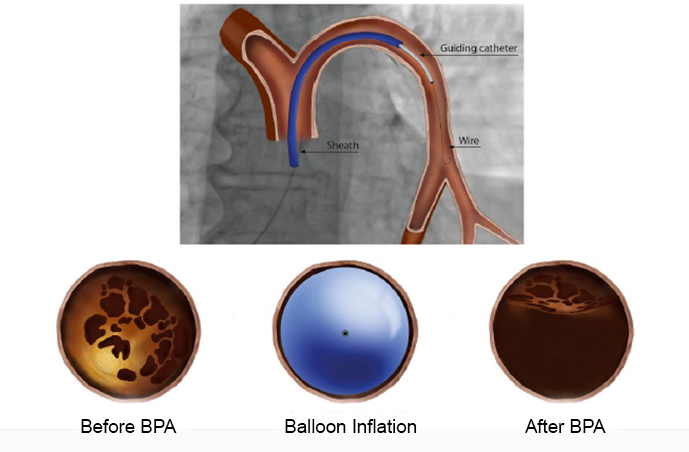
The BPA procedure
A catheter is inserted through a vein in the groin (usually) and guided through the heart and into the pulmonary arteries. Wires are placed through the catheter to help position it appropriately. A catheter with a small balloon is then positioned across the blockage and the balloon is inflated opening the vessel. This is done in stages, over multiple sessions, to reduce risk.
A BPA is recommended when:
- There is evidence of CTEPH or sometimes CTED (chronic thromboembolic disease). CTED refers to chronic blockages with normal pulmonary artery pressures.
- The patient is symptomatic from either CTEPH or CTED despite taking medication.
- Surgery (pulmonary thromboendarterectomy or endarterectomy, known as PTE or PEA) is not possible because the blockages are too small or too far into the lung (distal disease).
- Surgery was done but pulmonary hypertension persists or returns.
- Surgery carries unacceptable risk because of other medical conditions.
Who should be considered for BPA?
A specialized CTEPH team generally decides who is a candidate for BPA. This team often involves a pulmonary vascular specialist (pulmonologist or cardiologist), a trained catheter proceduralist (interventional cardiology or interventional radiology) and a surgeon experienced with CTEPH and pulmonary thromboendarterectomy.
A thorough evaluation typically includes a ventilation–perfusion (V/Q) scan, CT pulmonary angiography, right heart catheterization, and pulmonary angiography to map the blockages.
Testing for PH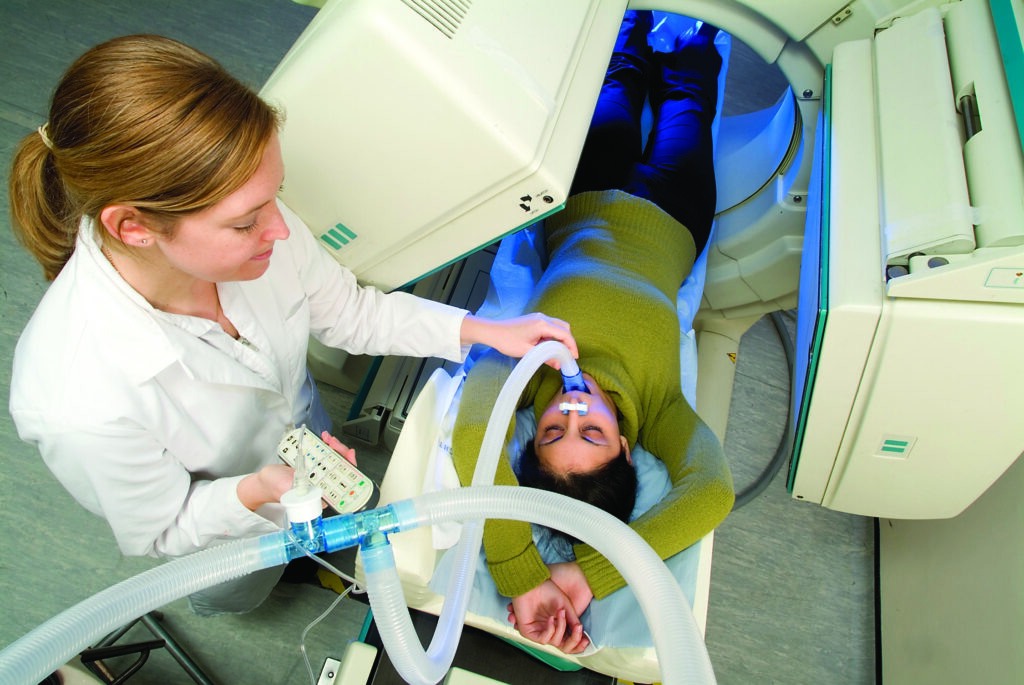
What to expect from the procedure
- BPA is usually performed in a catheterization lab or hybrid operating room under local anesthesia and sedation.
- The team treats only a few vessels per session to minimize complications; most patients need multiple sessions spaced weeks apart.
- The patient may be hospitalized overnight for observation.
- The goal is to improve functional status and quality of life.
Like many medical procedures, there are risks connected with BPA that should be discussed with your CTEPH specialist. These include reperfusion pulmonary edema (fluid in the lungs), bleeding or coughing up blood, injury to the lung vessels, contrast or radiation-related effects, and, rarely, more serious complications. The risk is lower when the procedure is done in experienced centers.