


Unlike fresh clots that can sometimes be dissolved with medication, older clots in the lungs turn into scar-like tissue and stick to the artery walls. An intervention is the only way to remove them. For about two-thirds of patients, PTE can dramatically improve or even cure CTEPH.
Who is a candidate?
You may be a candidate if you:
- Have pulmonary hypertension caused by old clots in your lungs.
- Have test results showing that surgery could improve blood flow.
- Do not have other medical conditions that would make surgery more risky.
What happens during surgery?
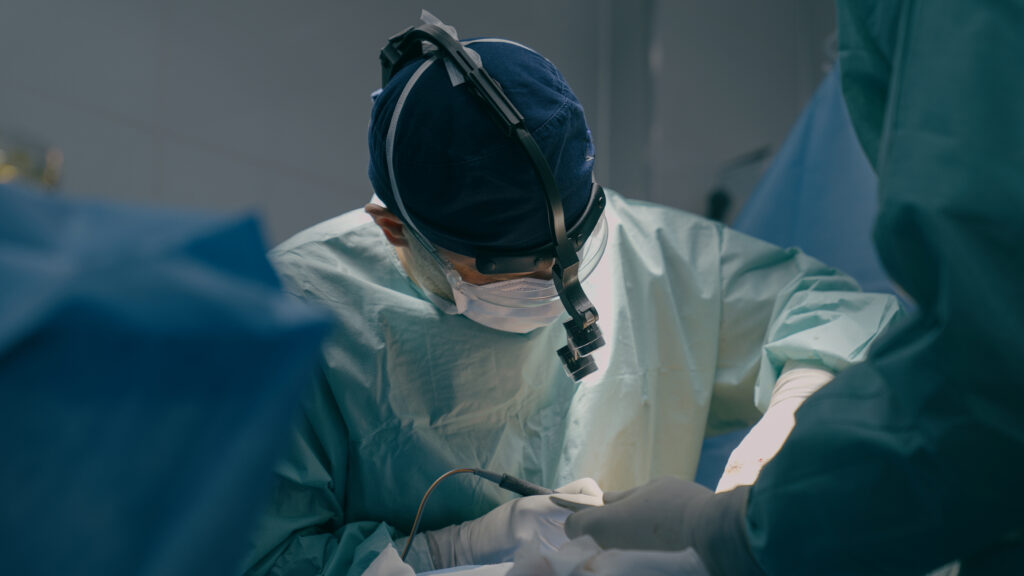
- Preparation: You’ll be asleep under general anesthesia, with a breathing tube and monitoring lines in place.
- Accessing the lungs: The surgeon makes an incision in the chest, separates the breastbone, and connects you to a heart-lung bypass machine, which temporarily takes over the job of pumping blood and oxygen.
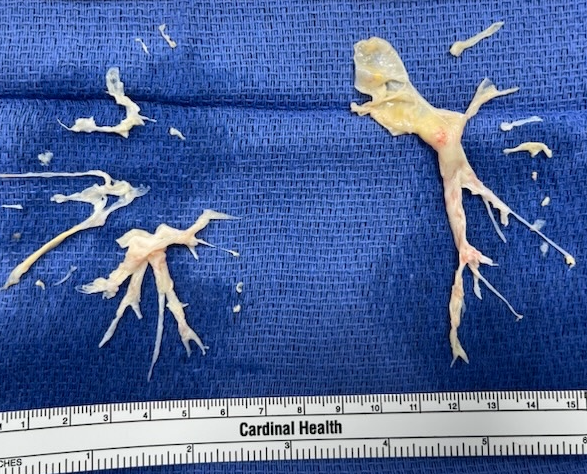
- Clot removal: To see the clots clearly, surgeon briefly pauses blood flow and cools your body down (like lowering a thermostat) to protect your organs. They then carefully peel out the scarred clots from your lung arteries.
- Closing up: Once the clots are removed, your body is rewarmed, your heart is restarted, and chest drains are placed to remove extra fluid from around the heart. The surgery usually lasts most of the day.
What happens right after?
- ICU recovery: You’ll wake up in the Intensive Care Unit (ICU), usually still on a breathing machine overnight. Once you’re stable, the tube is removed, and you’ll switch to oxygen by mask or nasal cannula.
- Getting moving: Chest drains stay in place for a few days. Most patients start getting out of bed the day after coming off the ventilator and begin walking soon after, with help.
- Testing before going home: Doctors usually repeat heart and lung scans to set a “new baseline” for comparison in the future.
Recovery at home
- Oxygen: Some patients need oxygen for a few months while the lungs heal, even if they didn’t need it before.
- Activity limits: Walking is encouraged but lifting anything heavier than 5–10 pounds should be avoided for about 8 weeks to allow the breastbone to heal.
- Blood thinners: Blood thinners will need to be taken for the rest of your life to avoid CTEPH recurrence.
- Follow-up: Your doctors will want updated scans and echocardiograms to check how your heart and lungs are doing.
Risks and outcomes
- In expert centers, the risk of death from surgery is usually less than 5%. Because this is a specialized surgery, it is important to have it done at a center that performs them regularly.
- Most patients experience major improvements — they can breathe easier, exercise more, and their lung pressures drop significantly.
- About 10–15% of patients still have some pulmonary hypertension after surgery, but many of them still feel much better and may receive additional medications.
Bottom line:
PTE surgery is a complex but often life-changing procedure. In the right patients, it can dramatically improve quality of life and even cure CTEPH. Success depends heavily on being treated at a hospital with surgeons who specialize in this procedure. If surgery is not possible, patients may benefit from another procedure, balloon pulmonary angioplasty for CTEPH.
Read more about PTE
-
 PTE Surgery Discovers a ‘Young Heart’
Mark Porter, 49, lives in Rexburg, Idaho, with Erin, his wife of 26 years. They have three sons, Colton, Carson and Caleb. Mark owns Porter’s Office Products and enjoys working out, skiing and water skiing. He originally shared his story in the winter 2022 issue of Pathlight, the Pulmonary Hypertension Association’s member magazine.
-
 CTEPH Treatment
In this short video, Gustavo Heresi, MD, a CTEPH expert, explains the different treatment options for chronic thromboembolic pulmonary hypertension (CTEPH).
About PH | Diagnosis & treatment
-
 CTEPH Updates: What You Should Know
Dr. Sandeep Sahay, MD, provides an overview of the latest advancements in CTEPH diagnosis and treatments. He shares tips on important lifestyle changes, how to find support resources, and the best ways to work with your health care team to get the care you need.
About PH