Sleep apnea is a potentially serious sleep disorder that causes a person’s breathing to repeatedly stop and start while they sleep. Mild to moderate Group 3 PH due to a lack of oxygen is a common complication of sleep apnea.
Pulmonary pressure often increases during sleep, possibly as a result of low levels of oxygen and pressure changes inside the chest.
There are two types of sleep apnea. Obstructive sleep apnea, which is more common, occurs when throat muscles relax during sleep, causing a blockage in the airway. Central sleep apnea occurs when the brain does not send proper signals to the muscles that control breathing.
The most common signs and symptoms of obstructive and central sleep apnea include:
- Loud snoring.
- Brief episodes of stopped breathing (noted by another person).
- Abruptly waking up choking or snorting.
- Waking up with a dry mouth or sore throat.
- Morning headache.
- Attention problems.
- Feeling tired during the day.
Diagnosing PH
Let your doctor know if you experience any of these symptoms because they could indicate sleep apnea-associated PH:
- Light-headedness and fainting.
- Unexplained shortness of breath.
- Increased fatigue.
- Swelling of the ankles, arms, legs or abdomen.
- Chest discomfort or pain.
Testing for PH
Doctors who suspect PH in addition to sleep apnea can order any of the following diagnostic tests:
Echocardiogram
Pulmonary function tests
Ventilation-perfusion (V/Q) scan
Natriuretic peptide tests
Right heart catheterization
In addition to directly measuring pressures in the heart and lungs, a right heart catheterization can determine whether patients have problems with a stiff left side of the heart. Left heart disease also can cause PH. In those cases, doctors refer patients to a cardiologist to treat the heart disease.
Diagnosing Pulmonary HypertensionTreatment options
Treating sleep apnea can improve or possibly resolve PH. If the symptoms continue or worsen, further evaluation is required.
Sleep apnea associated with PH is usually mild to moderate. There is little information about the effectiveness of PH-specific therapies for sleep apnea-related PH. However, all patients can benefit from appropriate treatments, including:
- Paying special attention to fluid balance with a low-sodium diet and diuretics (water pills)
- Using supplemental oxygen as directed
- Using optimal bronchodilator inhalers
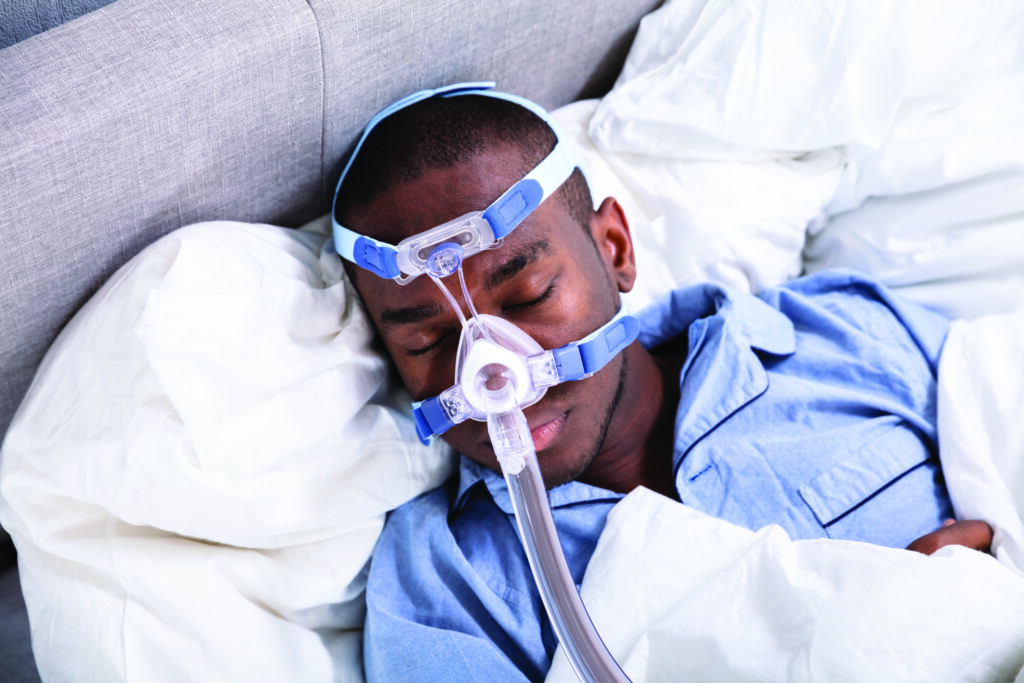
- Treating sleep apnea with continuous positive airway pressure (CPAP)
Many patients show significant improvement when their physician determines an effective medical approach and treatment plan, often in conjunction with doctor-prescribed cardiopulmonary rehabilitation.
It is important to first treat sleep apnea and make sure patients get enough oxygen at night. If symptoms persist, and the pulmonary artery pressures are still high, patients might benefit from a PH medication. Patients should visit a PH-treating specialist, such as those at a Pulmonary Hypertension Association-accredited PHA Care Center, for a detailed assessment and appropriate next steps.
Video: Unraveling the Link Between Sleep Apnea and Pulmonary Hypertension
PH Insights Podcast: Sleep-Disordered Breathing
Sleep medicine physician Dr. Mary Jo Farmer discusses the relationship between sleep-disordered breathing and pulmonary hypertension.
Listen Now
Learn more about Group 3 PH
-
 Diagnosing Pulmonary Hypertension
Common symptoms, many causes and a variety of tests can make pulmonary hypertension difficult to diagnose. Knowing what symptoms to look for and diagnostic tests that provide critical information can lead to an earlier diagnosis and better outcomes.
-
 Group 3: PH Due to Lung Disease or Hypoxia
Chronic obstructive lung diseases such as COPD or emphysema, restrictive lung diseases such as interstitial lung disease or pulmonary fibrosis, or a lack of oxygen through sleep apnea and high-altitude environments can all cause Group 3 PH.
Contact a PH Specialist
Download or order a brochure
Information on PH and Sleep Apnea is one of a series of PH& brochures available to download as a PDF or to order as a printed brochure.
PH & Sleep Apnea